
Feed Your Mood: The Trini Guide to Fighting Depression with Food
Can a bowl of Callaloo or a slice of King Fish actually make you happier? Science says yes. This deep dive explores the critical link between the "Western Diet," the Gut-Brain Axis, and mental health. I break down the science of inflammation and the microbiome, then translate it into a Caribbean context. Discover how to swap fast food for nutrient dense local superfoods and follow a curated, one day Trinidadian meal plan designed to boost your mood and nourish your mind.
THE BASICS OF HEALTHY LIVINGCARIBBEAN LIVING AND LIFESTYLE
Iola prieto
1/3/20267 min read
The Silent Struggle and the Plate
In Trinidad and Tobago, we are known for our vibrant culture, our infectious music, and our "liming" lifestyle. We are a people of high energy and warm spirits. Yet, beneath the surface of carnival colors and sunny days, many of us are silently wrestling with a gray cloud: depression and anxiety. While mental health is a complex issue involving genetics, environment, and life circumstances, there is a powerful piece of the puzzle that often sits right in front of us, our plate.
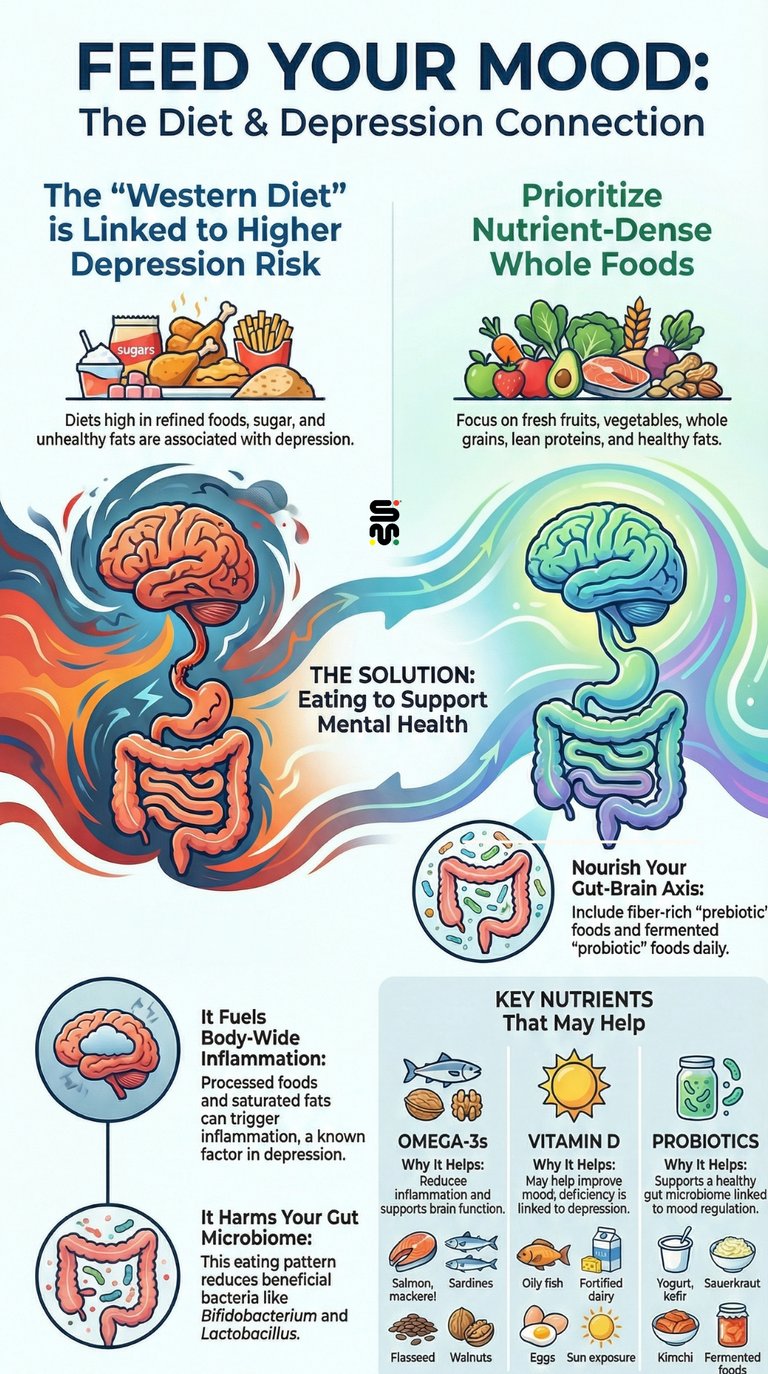
For decades, we viewed food merely as fuel gas for the tank. If you were hungry, you ate. If you wanted "sweet hand" food, you indulged. But emerging research in the field of nutritional psychiatry has revolutionized how we see our meals. The infographic provided, "Feed Your Mood: The Diet & Depression Connection," highlights a startling reality: what we eat directly talks to our brain.
The modern Caribbean diet has shifted. We have moved away from the "ground provisions" and fresh catches of our grandparents and drifted toward the "Western Diet" processed meats, sugary drinks, and fast food chains on every corner. This shift isn't just affecting our waistlines; it is inflaming our brains.
This guide is not about dieting to look good for Carnival. It is about eating to feel good for life. We will explore the science behind the gut-brain connection and, most importantly, how to apply this knowledge using the rich, flavorful, and accessible ingredients found right here in Trinidad and Tobago.
The Science of "Feeding Your Mood"
To understand how to fix the problem, we must first understand the mechanism. The infographic outlines two main pathways: the dangers of the Western Diet and the healing power of the Gut-Brain Axis.
A Recipe for Inflammation
The "Western Diet" is characterized by high intakes of processed foods, refined sugars, and unhealthy fats (often found in deep-fried foods). In a Trini context, think of the daily consumption of soft drinks, overly greasy fried chicken, white bread (puff), and sweets.
The Inflammation Connection: When we consume these processed items, our body treats them as foreign invaders. The immune system kicks in, creating inflammation. While acute inflammation heals a cut on your finger, chronic body wide inflammation is dangerous. The infographic notes that this inflammation doesn't just stay in the body; it affects the brain.
Cytokines: Inflammation releases chemicals called cytokines. High levels of these chemicals are consistently found in people suffering from major depression. They can shut down the production of "feel-good" hormones and damage brain cells.
The Gut-Brain Axis
Perhaps the most fascinating discovery in modern medicine is the Gut-Brain Axis. As illustrated in the graphic, a vagus nerve physically connects your brain and your gut. They are constantly texting each other.
The Second Brain: Your gut is often called your "second brain" because it produces approximately 90% of your body's serotonin the neurotransmitter responsible for regulating mood, sleep, and appetite.
The Microbiome: Your gut is home to trillions of bacteria. In a healthy gut, beneficial bacteria (like Bifidobacterium and Lactobacillus) thrive. They protect the gut lining and produce mood-regulating chemicals.
The Damage: When we eat the Western Diet, we starve the good bacteria and feed the bad bacteria. This leads to "dysbiosis" (an imbalance), which sends distress signals to the brain, manifesting as anxiety, brain fog, and depression.
Returning to Our Roots
The irony of the health crisis in the Caribbean is that our traditional, indigenous diet is naturally one of the healthiest on the planet. The "solution" presented in the infographic—prioritizing nutrient-dense whole foodsis actually a description of how our grandparents ate.
However, convenience has overtaken tradition. A "quick doubles" or a box of fast food is easier than peeling dasheen or stewing beans. To treat our mood, we don't need to buy expensive, imported "health foods" like kale or quinoa. We simply need to look at the local market with fresh eyes.
Nutrient Density in Trini Soil
Caribbean soil produces ingredients rich in the specific nutrients required to fight depression:
Omega-3 Fatty Acids: Essential for reducing brain inflammation.
Vitamin D: Critical for mood regulation.
Probiotics & Prebiotics: Necessary for gut health.
B-Vitamins (Folate): Vital for energy and brain function.
Let’s break down how to source these locally.
Trini Superfoods for Mental Health
Here is how to translate the generic recommendations of the infographic into a Trinbagonian shopping list.
Omega-3s: Beyond Salmon
The infographic suggests salmon and sardines. While we have those, our local waters are teeming with oily fish that are just as potent.
King Fish & Carite: These are staples in Trini cuisine. They are rich in healthy fats that build brain cell membranes.
Mackerel: Often used in "fry dry" or stew, mackerel is an Omega-3 powerhouse.
Walnuts & Flaxseed: These are great, but don't sleep on Avocado (Zaboca). While different in fat profile, the monounsaturated fats in a good Trini Zaboca support healthy blood flow to the brain.
Vitamin D: The Sunshine Vitamin
The infographic lists "Sun exposure" as a source. In Trinidad, we have no excuse for Vitamin D deficiency, yet many of us spend our days in air-conditioned offices and cars.
The Sun: 15 minutes of morning sun (before it gets too hot) is the best natural antidepressant available.
Food Sources: Eggs (from local chickens) and fortified dairy. But the best source remains a walk around the Savannah or a sit-down on the porch.
Probiotics and Prebiotics: The Gut Guardians
This is where we need to be creative.
Probiotics (The Good Bacteria): We don't have a massive culture of fermented foods like Kimchi, but we have Yogurt. Making homemade yogurt or buying plain yogurt and sweetening it with local honey is a great start.
Prebiotics (The Food for the Bacteria): Prebiotics are fibers that humans can't digest, but our gut bacteria love.
Provisions: This is the Trini secret weapon. Dasheen, Eddoes, Cassava, and Sweet Potato are incredible sources of resistant starch (a type of prebiotic) when cooked and then cooled. They feed the good bacteria in your lower intestine.
Bananas: Specifically, green figs (green bananas) are massive prebiotic sources. A "Green Fig Salad" is actually a gut-health super meal.
Anti-Inflammatory Spices
Our local seasoning is medicine.
Turmeric (Saffron Root): We use this in curry. Curcumin, the active compound in turmeric, is a potent anti-inflammatory that rivals some pharmaceuticals in effectiveness against depression when consumed regularly.
Ginger: Great for the gut and inflammation.
Bhandhaniya (Culantro): Rich in antioxidants.
Cocoa: Trini cocoa is world-famous. Dark chocolate (70%+) or raw cocoa tea is high in flavonoids which boost blood flow to the brain and improve mood.
How to Eat to Beat the Blues
Knowing the food is one thing; eating it is another. Here are three rules for a "Mood-Boosting" Trini Diet.
Rule #1: "Eat the Rainbow" (and we don't mean Snow Cone)
Depression often correlates with a lack of micronutrients. Your plate should look colorful.
Red: Tomatoes, Watermelon, Sorrel.
Green: Bhagi, Dasheen Bush, Ochro, Cucumber.
Orange/Yellow: Pumpkin, Carrots, Paw Paw, Mango.
Purple: Eggplant (Baigan).
Rule #2: Swap the "White" for "Complex"
White rice and white flour (roti skins, bread) spike your blood sugar. This spike is followed by a crash, which mimics symptoms of depression (lethargy, irritability).
The Swap: Switch white rice for Brown Rice or Provisions. If you eat Roti, try whole wheat, or eat the "filling" (curry) with a side of salad and less dough.
Rule #3: Hydrate with Purpose
Dehydration causes fatigue and brain fog.
The Swap: Replace the "sweet drink" (soda) with Coconut Water. It is full of electrolytes (magnesium and potassium) which are essential for nervous system function. Plain water with a squeeze of lime is also perfect.
The "Happy Belly" Trini Meal Plan (1 Day)
This meal plan is designed to be high in Omega-3s, fiber (prebiotics), and anti-inflammatory spices, while low in refined sugar.
Breakfast: The savory Power Start
Goal: High protein to stabilize blood sugar, plus healthy fats.
Dish: Buljol with Boiled Provisions
Ingredients: Saltfish (soaked well to reduce sodium), tomatoes, onions, sweet peppers, garlic, olive oil (or coconut oil).
The Carb: A slice of boiled Dasheen or Sweet Potato (rich in fiber).
The Fat: A slice of Zaboca (Avocado).
Why it works: The fish provides protein. The onions and garlic are prebiotic. The Zaboca provides healthy fats for the brain. The provisions provide sustained energy without the sugar crash of sugary cereal.
Drink: A cup of Cocoa Tea (made with local cocoa balls, little sugar, and spices like cinnamon/nutmeg).
Mid-Morning Snack: The Brain Booster
Option: A small bowl of Chow.
Mango or Pineapple chow. Use plenty of Bhandhaniya (Shadow Beni) and fresh garlic.
Why it works: The fruit provides Vitamin C (reduces stress), and the garlic/herb combo is anti-inflammatory.
Lunch: The Gut-Healing Feast
Goal: Heavy on the greens and "good" carbs.
Dish: Stew Fish with Callaloo and Brown Rice
The Protein: Slices of King Fish or Carite, stewed in a tomato-based sauce (lycopene) with thyme and pimento.
The Superfood: Callaloo. This is the ultimate Trini superfood. Dasheen bush is packed with iron and folate. Folate deficiency is directly linked to depression. Okra in the callaloo provides mucilage which heals the gut lining. Coconut milk provides healthy fats.
The Base: A small scoop of brown rice or red beans.
Why it works: This meal hits every requirement: Omega-3s (fish), Folate (greens), Fiber (okra/rice).
Afternoon "Pick-Me-Up"
Goal: Beat the 3 PM slump without caffeine or sugar.
Option: A handful of Peanuts (fresh, in the shell) or Pumpkin Seeds.
Drink: A glass of Fresh Mauby (if not too sweet) or Portugal Juice. Mauby has been shown to lower blood pressure and induce relaxation.
Dinner: Light & Soothing
Goal: Easy digestion to ensure good sleep (sleep is vital for mood).
Dish: Pumpkin & Split Pea Soup
Ingredients: Pumpkin, split peas, carrots, celery, corn, and dumplings (whole wheat if possible).
Why it works: Pumpkin is rich in Vitamin A and antioxidants. Split peas increase serotonin production (tryptophan). It is warm and comforting, which has a psychological benefit.
Side: A light cucumber and watercress salad. Watercress is one of the most nutrient-dense vegetables available.
Beyond the Plate – The Trini Lifestyle
Food is the fuel, but the engine needs maintenance too. To truly "feed your mood," combine this meal plan with the local lifestyle advantages we often take for granted.
1. Liming is Therapy (Social Connection) The "Western" lifestyle is often isolated. The Trini "lime" is a natural antidepressant. Socializing releases oxytocin. However, try to shift the lime away from just drinking alcohol (a depressant) to activities a river lime, a hike, or a beach day.
2. Sea Bath Cleansing There is a reason we say "go by the sea and bathe" when someone is feeling low. The ocean provides magnesium absorption through the skin, the sun provides Vitamin D, and the rhythmic sound of waves reduces cortisol (stress hormone) levels.
3. Movement You don't need a gym. A "sweat" in the backyard, playing football, or even vigorous gardening counts. Exercise increases BDNF (Brain-Derived Neurotrophic Factor), a protein that repairs brain cells.
One Meal at a Time
Depression is a heavy burden, and it is not something that can be "cured" overnight with a single meal. Professional help is vital. However, we often underestimate the power we have in our own hands—or rather, on our forks.
By turning away from the processed "Western" diet that inflames our bodies and embracing the nutrient-dense, vibrant, and natural foods of Trinidad and Tobago, we give our brains a fighting chance. We feed the good bacteria, we quell the inflammation, and we provide the raw materials for happiness.
So, the next time you feel the weight of the world, don't reach for the donut. Reach for the Dasheen. Peel a Portugal. Steam a fish. Feed your body, and your mood will follow.
Wellness
Empowering you through fitness and nutrition coaching.
Contact Us
Join The Staymoving community
+1-868-359-9361
© 2025. All rights reserved.