
Beyond the Pill: The Science of Nutrient Synergy and Rivalry
We’ve all been there, standing in the supplement aisle or looking at a plate of healthy food, wondering if we’re actually getting the benefits we’re paying for. As a nutrition expert, the most common mistake I see isn't a lack of vitamins, it’s a lack of bioavailability. In the world of nutritional science, we call this Nutrient Synergy. Some vitamins are best friends that unlock each other's potential, while others are rivals that compete for attention. If you want to stop wasting money on supplements and start feeling the difference, you need to master the art of the pairing.
THE BASICS OF HEALTHY LIVINGVITAMINS AND MINERAL SYNERGY
Iola Prieto
4/25/20263 min read
Beautiful Soul,
As a nutrition expert, I often tell my clients that you aren't just what you eat, you are what you absorb. Many people invest in high-quality supplements and organic produce, yet they fail to see results because they don't understand the "attachment science" of nutrition. In the world of biochemistry, nutrients rarely work in isolation. Instead, they operate through a complex system of Nutrient Synergy, where certain vitamins and minerals act as bio-available buddies to unlock each other’s potential. If you want to stop wasting your efforts and start optimizing your health, you must learn which nutrients are power couples and which are bitter rivals.
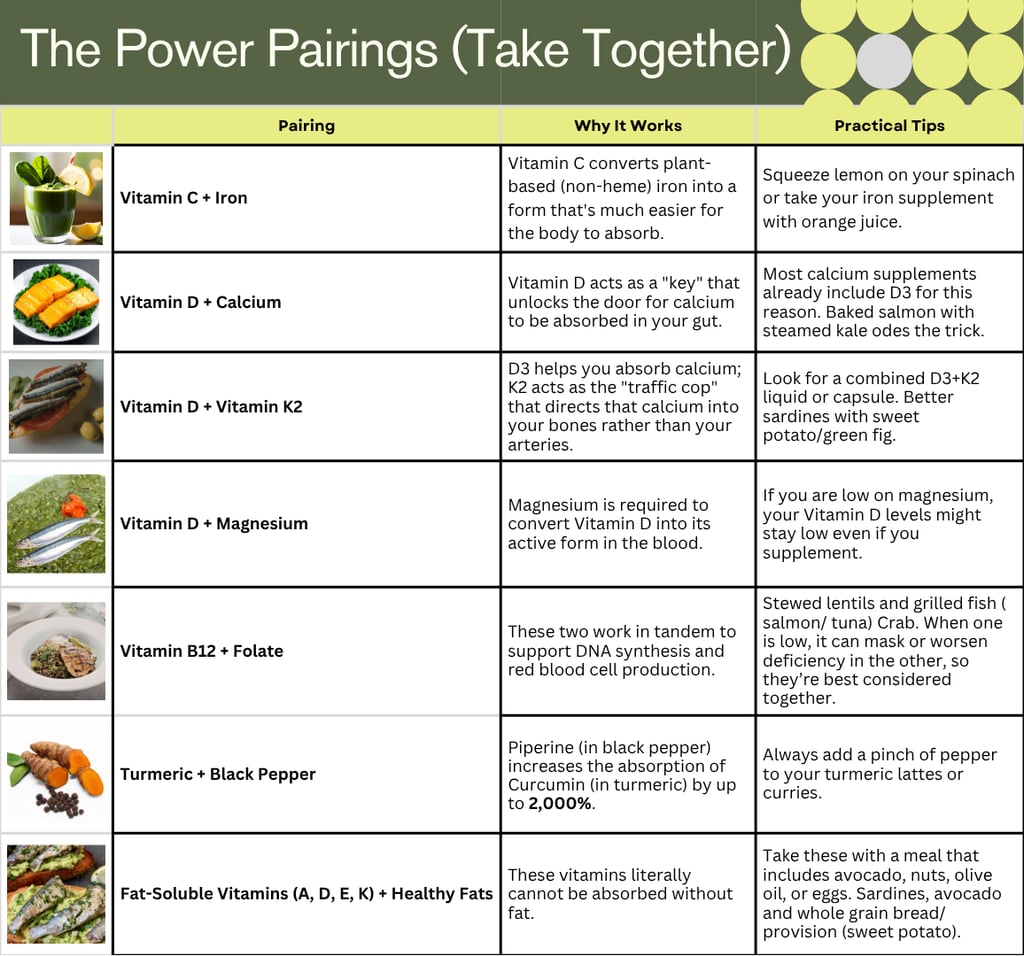
One of the most vital pairings for energy and blood health is the combination of Vitamin C and Iron. Plant-based iron, known as non-heme iron, is notoriously difficult for the human digestive tract to capture on its own. However, when you introduce Vitamin C, a chemical reaction occurs that converts the iron into a more soluble form, significantly boosting its uptake. You can put this into practice easily by squeezing fresh lemon over a spinach salad or pairing your morning iron supplement with a glass of orange juice. Similarly, the relationship between Vitamin D and Calcium is a fundamental pillar of bone health. Vitamin D acts as the biological "key" that opens the doors of your intestinal lining, allowing calcium to pass into the bloodstream. Without sufficient Vitamin D, your body simply cannot harvest the calcium from your diet, regardless of how much dairy or kale you consume.
Beyond simple absorption, some pairings act as "traffic controllers" for your internal systems. While Vitamin D helps you absorb calcium, Vitamin K2 ensures that the calcium actually reaches your bones and teeth instead of depositing in your arteries, where it could cause cardiovascular issues. This is why many modern practitioners recommend a D3+K2 combination. Furthermore, for Vitamin D to even become biologically active in your blood, it requires Magnesium. If you are magnesium deficient, your Vitamin D levels will likely remain low even with heavy supplementation. This is why including magnesium rich seeds, nuts, and legumes in your diet or taking a magnesium supplement in the evening is essential for "turning on" your Vitamin D.
We must also consider the physical environment required for nutrients to move. Vitamins A, D, E, and K are fat-soluble, meaning they are hydrophobic and will not dissolve in water. If you take these vitamins on an empty stomach or with a fat-free meal, they will likely pass through your system completely unabsorbed. To ensure these nutrients reach your cells, you should always pair them with Healthy Fats like avocado, olive oil, eggs, or fatty fish like sardines. As noted in the sardine standard, certain whole foods are nature’s perfect packages, providing the Vitamin D, healthy fats, and minerals all in one bite to ensure maximum synergy.
A true expert routine must account for "Nutrient Rivalries." Just as some vitamins help each other, others compete for the same absorption pathways, creating a "traffic jam" in your gut. Calcium and Iron are the most famous rivals, if taken together, calcium can block iron absorption by up to 50%. To avoid this, I recommend taking your iron in the morning and your calcium or dairy products in the evening. Additionally, be mindful of your caffeine intake. The tannins in coffee and tea can bind to minerals like zinc and iron, rendering them useless. By waiting at least one hour after your morning brew before taking your supplements, and by strategically spacing out competing minerals, you can finally master the science of attachment and truly fuel your body's potential.
Pro Tip
If you're looking for a one-stop meal that hits many of these synergies at once, try stewed lentils (Iron) with a squeeze of lemon (Vitamin C) served alongside grilled salmon (Vitamin D and Fats) and a side of leafy greens (Vitamin K).
Healthfully,
Iola
Wellness
Empowering you through fitness and nutrition coaching.
Contact Us
Join The Staymoving community
+1-868-359-9361
© 2025. All rights reserved.