
America Sneezes, We Get Diabetes: A Trini’s Guide to the 2025 USDA "Real Food" Revolution
The USDA just hit the reset button on nutrition, ditching calorie counting for "Real Food" to fight chronic disease. We break down what the new 2025-2030 Guidelines mean for Trinidad and Tobago, why it might be time to swap the "fry dry" for provisions, and how to fix your Sunday lunch without losing your Trini passport.
CARIBBEAN LIVING AND LIFESTYLETHE BASICS OF HEALTHY LIVINGPUBLIC HEALTH AND NUTRITION POLICY
Iola Prieto
1/12/20266 min read
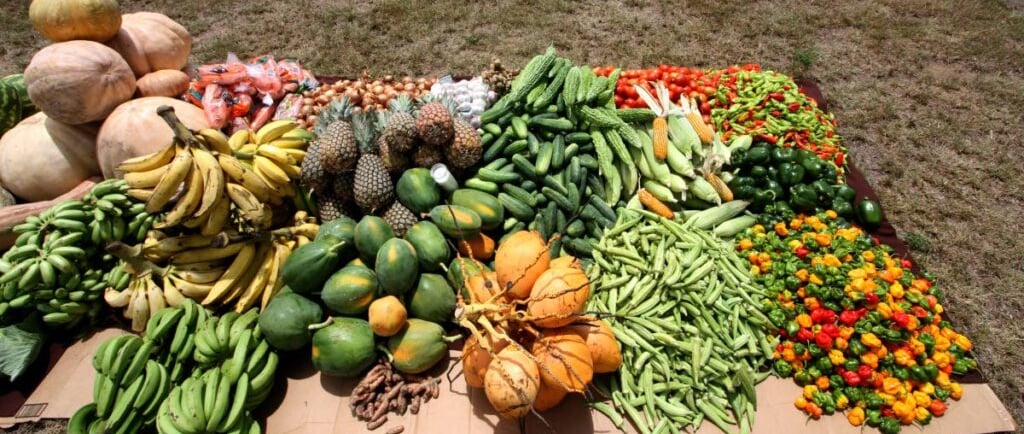
If there is one universal truth in the Caribbean, it’s this: When America sneezes, Trinidad and Tobago catches a cold. But in 2026, we aren't just catching colds, we’re catching Type 2 Diabetes, hypertension, and a serious case of "the itis" after Sunday lunch.
The United States Department of Agriculture (USDA) just dropped its 2025–2030 Dietary Guidelines for Americans, and let me tell you, it’s a plot twist. Under the new banner of "Make America Healthy Again," the US government has done something shocking: they’ve stopped telling people to count calories and started telling them to eat real food.
Why should a Trini in Arima or San Fernando care what bureaucrats in Washington think? Because, unfortunately, our diet has become the "Standard American Diet" (SAD) with a side of pepper sauce. We love our KFC (we are the per capita kings, after all), our sweet drinks, and our "box a dead" lunches.
But with T&T facing an NCD (Non-Communicable Disease) crisis where 60% of our deaths are lifestyle-related, maybe it’s time we macco what the neighbors to the North are doing.
Here is the breakdown of the new guidelines, why they are better than the old "food pyramid," and how to apply them without giving up your passport.
Real Food vs. "Edible Products"
For decades, dietary advice was complicated. It felt like you needed a PhD in calculus to figure out if an egg was good or bad for you this week. The old guidelines focused on low-fat, high-carb diets that accidentally turned everyone into sugar addicts.
The 2025 Guidelines have hit the reset button. The new message is ruthlessly simple: Eat Real Food.
What is "Real Food"?
According to the document, real food is nutrient dense and unprocessed. It nourishes the body, restores health, and fuels energy. It is not made in a lab, and it doesn't have an ingredient list longer than a frantic WhatsApp voice note.
The New "Holy Grail" of Eating:
Prioritize: Protein, full-fat dairy, vegetables, fruits, healthy fats, and whole grains.
Eliminate/Slash: Highly processed foods, added sugars, refined carbs (white flour), and chemical additives.
Why is this better? The science has shifted from "Calories In, Calories Out" to Metabolic Health. The guidelines explicitly state that chronic diseases are not just "genetic destiny" but the predictable result of eating highly processed garbage. When you eat processed foods (like that packet of biscuits you had for breakfast), your body doesn't register satiety the same way. You get hungry again in an hour. Real food fixes your hunger hormones (leptin and ghrelin) so you stop eating when you’re full, a concept known in Trinidad and Tobago as "belly buss," but achievable before the pain sets in.
How to Translate This to Local Culture
We can’t just copy paste American food into T&T. We don’t have cheap blueberries, and our "winter squash" is pumpkin. So, let’s look at the core pillars of the new guidelines and see how they fit into a Trini pot.
"Fry Dry" is Not a Food Group
The Guideline: Prioritize high-quality protein at every meal. The goal is 1.2 to 1.6 grams of protein per kg of body weight. The Trini Reality: We eat a lot of "meat," but it’s often deep fried or hidden under a mountain of rice.
The Science: Protein is the building block of life. It maintains muscle mass (which burns fat just by existing) and keeps your blood sugar stable. If you eat a doubles (pure carb + fat) with no protein, your blood sugar spikes, then crashes, leaving you craving a Solo.
The Fix:
Stew Chicken: Actually perfect. It’s braised, not deep fried. Just watch the amount of "browning" (burnt sugar) you use.
Fish Broth: A superfood.
Lentils/Red Beans: Excellent plant sources, but remember, the guideline says "swap deep-fried methods" for baked or roasted.
The Hard Truth: That 2-piece and fries is exactly what the document calls "highly processed food laden with unhealthy fats".
Dairy is Back (And it’s Full Cream)
The Guideline: Consume dairy, and when you do, choose full-fat with no added sugars. The Trini Reality: We love condensed milk. We love powdered milk with sugar added. We love "drinks" that claim to be milk but are mostly oil and corn syrup.
The Science: For years, they told us to drink skim milk. It tasted like white water and made us sad. Now, science admits that the fat in dairy helps you absorb vitamins (A, D, E, K) and keeps you full. The enemy wasn't the fat; it was the sugar we replaced the fat with.
The Fix:
Drink Full Cream Milk.
Eat Yogurt, but not the fruit-on-the-bottom kind that has 20g of sugar. Buy plain yogurt and cut a Julie mango into it.
Cheese: Yes, cheese is good. Pasteurized processed "cheese food product" (the plastic slices) is bad.
The "Sweet Drink" Menace
The Guideline: No amount of added sugar is recommended.
Limit: One meal should contain no more than 10 grams of added sugar.
The Trini Reality: A single bottle of red sweet drink has about 50-60 grams of sugar. That is six meals worth of sugar in one bottle.
The Science: Sugar is a metabolic toxin in high doses. It drives insulin resistance, which leads to Type 2 Diabetes (which 12-14% of our population has). The guidelines even warn against "non-nutritive sweeteners" (diet sodas), suggesting they aren't a free pass.
The Fix: This is the hardest one for us. We add sugar to fruit juice. We add sugar to mauby. We add sugar to water (looking at you, "flavored water").
Swap: Coconut water (natural electrolytes) instead of sports drinks.
Dilute: If you must have juice, the guidelines suggest diluting it with water.
Read Labels: If the ingredient ends in "-ose" (sucrose, fructose, dextrose), put it back on the shelf.
Healthy Fats vs. The Oil Slick
The Guideline: Use oils with essential fatty acids (like olive oil) or saturated fats like butter and beef tallow. Avoid "unhealthy fats" found in processed foods. The Trini Reality: Soybean oil. Everything is soybean oil.
The Science: The document quietly brings butter and tallow (beef fat) back into the fold. This is revolutionary. For 50 years, we were told animal fat causes heart attacks. Now, the focus is on reducing seed oils (often high in Omega-6s which can be inflammatory) and processed fats.
The Fix:
Cook with Coconut Oil (it’s our heritage!).
Don't be afraid of a little butter on your provisions.
Stop buying "Vegetable Oil" (which is usually soybean or corn blend) and look for olive or coconut.
The "Doubles" Dilemma
Let’s apply the USDA 2025 Guidelines to the national dish of Trinidad and Tobago: Doubles.
Barra: Made of white flour (refined carbohydrate) and deep-fried (processed fat). Verdict: Fail.
Channa: Chickpeas (legume/protein). Verdict: Pass.
Chutneys: Cucumber (veg - Pass), Mango/Tamarind (Fruit - Pass, but often loaded with added sugar - Fail).
Pepper: Metabolic booster. Verdict: Pass.
The Score: Doubles is delicious, but it is a metabolic bomb of refined carbs and fried oil. The Solution? You don't have to stop eating Doubles. That would be treason. But maybe don't eat three of them every morning. Treat it as a treat, not breakfast. Or, if you're brave, eat the channa with a spoon and skip one of the barras (I can hear the steups from here).
How to "Make T&T Healthy Again"
We don't need a government mandate to fix our plates. Here is a simple, 3-step plan to apply these modern scientific guidelines to a Trini lifestyle.
The "Sunday Lunch" Makeover
Sunday lunch is usually Macaroni Pie (refined carb), Callaloo (Superfood!), Stew Chicken (Protein), Salad (Veg), and Potato Salad (Carb + Mayo).
The Tweak: Keep the Chicken and Callaloo. They are elite "Real Foods."
The Change: Swap the Macaroni Pie for Provisions (Dasheen, Yam, Cassava). The guidelines love "whole foods". Local root vegetables have fiber and nutrients that white pasta does not.
The Portion: Eat the salad first. It slows down the sugar spike from the pie.
Drink Water and Mind Your Business
Hydration is key. The guidelines explicitly say to choose water (still or sparkling) over everything else. In T&T heat, we claim we need "energy," so we drink sugary malts.
The Tweak: Ice cold water with a slice of lemon or cucumber. It’s fancy, it’s cheap, and your kidneys will send you a Thank You card.
Inspect Your Snacks
The guidelines have a specific limit for snacks: grain snacks (crackers) shouldn't have more than 5g of added sugar.
The Tweak: Check that pack of "healthy" wheat crackers in your cupboard. You might be surprised to find it has more sugar than a chocolate bar.
Better Snack: Nuts (peanuts, cashews) or fruit. A portugal is better than a pack of Zoomers any day.
We Have the Tools
Trinidad and Tobago actually has an advantage over the US. We still have open-air markets. We still have easy access to fresh fish and local meats. We still know how to cook from scratch.
The US is trying to claw its way back from a "processed food" nightmare that has left 70% of their adults overweight. We are following them down that path, but we aren't there yet.
We can choose Real Food. We can choose to eat things that grew from the ground, not things that were made in a factory.
So, the next time you're about to order a "box a dead" with a red sweet drink, remember the new golden rule:
If your great-grandmother wouldn't recognize it as food, don't eat it.
Now, who has a link for some good Dasheen?
Sources:
USDA Dietary Guidelines for Americans, 2025-2030
Trinidad & Tobago Ministry of Health NCD Stats (Contextual)
Wellness
Empowering you through fitness and nutrition coaching.
Contact Us
Join The Staymoving community
+1-868-359-9361
© 2025. All rights reserved.